
I watched Thunderf00t’s video “AI WILL KILL US ALL!!! - BUSTED!!” and laughed at one image he uses: a hypothetical superintelligence running in data centres would be a brain in a jar with a billion off switches. It needs electricity, cooling, chips, fuel, networks, and people who keep the whole chain working. A fuel-truck driver catching a cold is a funny example. The dependence behind the joke is real.
The video makes two different arguments. It mocks claims that today’s language models are about to become godlike, then asks how independent even a future superintelligence could be if it lived inside giant data centres. I don’t buy every claim in the video. Calling a language model a fancy search engine does not settle what current systems can do, and it does not prove that future AI risks are impossible. A system could still cause harm through people, software, or tools without knowing how to build a power plant or repair a transformer.
But the infrastructure point stayed with me. We worry that AI might destroy the world. At the same time, we are building more physical infrastructure to keep it running. What if we harm parts of our environment while trying to make AI more powerful? The irony is not that a model secretly wants to burn the planet. It is that human choices about power, land, water, fuel, and materials can cause real damage in the name of keeping the model available.
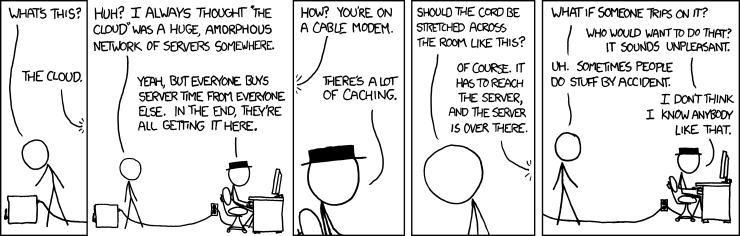
The word “cloud” hides the machinery. The computer seems far away, so the electricity and cooling can vanish from view too. The International Energy Agency’s latest review says data-centre electricity use rose 17 percent in 2025. It expects total use to double by 2030, while use by AI-focused data centres could triple. Those are projections, not promises. They also describe data centres as a whole in some figures, so they should not be mistaken for a precise count of electricity used by AI alone. The IEA lays out the estimates and uncertainty.
The demand is concentrated. A country-wide share can look small while a region has trouble connecting a new campus to the grid. The IEA says transformer and turbine supply, grid connections, permits, and advanced chips can all slow data-centre projects. Its analysis estimates that grid limits could delay about one fifth of the capacity planned for construction by 2030. The system needs years of work before a new server can answer a question in a fraction of a second.
One U.S. example shows how uncertain the forecasts can be. A 2025 update from Lawrence Berkeley National Laboratory estimates that data centres could use 9.5 to 15.3 percent of U.S. electricity by 2030, with 11.8 percent as its central estimate. Those figures include data centres of every kind, not just AI sites. They are still large enough to make siting and power choices matter. The lab explains its scenarios and methods.
Electricity is only one part of the bill. Data centres also need buildings, chips, networking equipment, backup systems, and cooling. Cooling can use water directly. Electricity production can use water too. Mining and chip manufacturing happen elsewhere, and old hardware eventually becomes waste. The United Nations Environment Programme says AI’s environmental impact needs to be assessed across its full life cycle, while noting that the data needed to measure it are still incomplete. Its 2024 review covers those stages and limits.
These costs do not land in one place. A model can serve people around the world while its data centre draws power and water from one region. Chip production, mining, and discarded equipment add more places to the chain. The people who benefit from a service may never see the land, water, and infrastructure that make it possible.
None of this shows that every AI service causes more harm than good. AI may help with energy management and other work that reduces resource use. The same IEA report discusses those possible benefits. They are not automatic, though. They depend on useful applications being adopted and on their savings exceeding the extra demand.
Then there are the people. Someone builds the data centre, connects the power, maintains the cooling system, replaces broken equipment, moves materials, and keeps networks working. A model can outperform a person on a narrow task and still depend on many people to keep its physical home alive.
The truck-driver joke needs one correction. Electricity usually reaches data centres through the grid, not in a methane truck, and a single worker calling in sick is unlikely to shut down a large facility. Operators can use backup power and spare equipment. Some developers are also planning on-site natural-gas generation where grid connections are slow. The IEA says those plants face their own technical challenges as AI loads change quickly. The details vary by site, but no design removes the need for a steady chain of power, hardware, water, transport, and maintenance.
That chain is not an argument that AI could never hurt people. It is a reminder that software depends on the physical world, and that people can connect software to systems with real effects. The video’s infrastructure joke makes one future scenario look less magical. It does not answer every question about what people may build, automate, or hand over to machines.
That’s the twist I took from the video. We spend a lot of time imagining an intelligent machine deciding to turn against us. We spend less time asking what we are choosing to do to land, water, air, and electricity systems so that more AI can run. A model does not need to want anything for those choices to have consequences.
“We are destroying Earth to have AI” is a deliberately oversized way to say it. The Earth will not disappear, and the research does not show that AI data centres will cause planetary destruction. The evidence does show rising electricity demand, local grid and equipment limits, and environmental costs across the supply chain that are not yet measured consistently. Those effects can still damage ecosystems and communities. How much they grow depends on where we build, what powers the sites, what we manufacture, and whether the services are worth their costs.
Maybe AI will never become a machine that can end civilization. I do not know. But we can already measure the human work and materials going into the systems that keep it online. AI may not destroy the world by itself. We could still do a lot of damage trying to keep it alive.